Molecular genetics
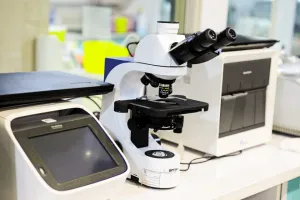
Molecular genetics is the field of biology and genetics that studies the structure and function of genes at a molecular level.
The study of chromosomes and gene expression of an organism can give insight into heredity, genetic variation, and mutations.
This is useful in the study of developmental biology and in understanding and treating genetic diseases.
Techniques in molecular genetics
- Amplification: Gene amplification is a procedure in which a certain gene or DNA sequence is replicated many times in a process called DNA replication.
- Separation and detection: In separation and detection DNA and mRNA are isolated from cells and then detected simply by the isolation. Cell cultures are also grown to provide a constant supply of cells ready for isolation.
How these tests work
In a molecular test, DNA or RNA is taken from your sample and PCR makes many copies of the piece we are looking for, so it can be identified and measured. This is why the method can pick up a very small amount of a virus, or a small change in a single gene. Quantitative PCR also measures how much virus is present. This is the viral load your doctor uses to follow your treatment.
What we test for
- Infections: viral load for hepatitis C, HIV, cytomegalovirus (CMV) and BK virus, and finding bacteria such as tuberculosis, chlamydia and brucella
- Human papillomavirus (HPV): finding the virus and its genotype
- Blood clotting: factor V Leiden, prothrombin (factor II) and factor XIII mutations
- Blood cancers: BCR/ABL (the Philadelphia chromosome), PML/RARA and AML1/ETO
Your result
A qualitative test is reported as positive or negative: the virus or mutation was found, or it was not. A quantitative test reports the amount of virus in each milliliter of blood, and your doctor usually looks at how that number changes over several tests. Methods differ a little from lab to lab, so it is best to have your follow-up tests at the same lab.
Inside Farda Lab
-
Farda Lab introduction film Since January 2013, aiming for the best service and the latest in medical and laboratory science.
A question about your test?
Call the lab. If coming in is hard for you, request sampling at home.
Hours, address and directions